By Doer Digitalz
🌐 https://doerdigitalz.com
Your business is moving forward. But are your everyday systems helping you grow or quietly holding you back?
Growth Is Good. But Can Your Software Keep Up?
Every growing business reaches a point where the way things used to work is no longer enough.
Your customer base expands. Your team gets bigger. More orders come in, projects become more complex, and everyday decisions demand faster answers.
But while your business moves forward, your internal systems may still be working the same way they did years ago.
Spreadsheets that once felt convenient become difficult to manage. Information gets scattered across emails, messages, and different applications. Employees spend valuable time repeating tasks that could be completed automatically.
The longer that gap remains, the more it can affect productivity, customer experience, and future opportunities.
1. When Everyday Tasks Become Complicated

Imagine a business where the sales team maintains customer information in one spreadsheet, accounts uses another system, and operations relies on emails and messaging applications to track work.
Each department may be doing its job well. Yet the overall process becomes slower because the systems don’t communicate with one another.
A simple customer request might require multiple phone calls, manual updates, and repeated follow-ups before it is completed.
As the number of customers and transactions increases, these small inefficiencies become significant.
Modern business software can bring important processes together, allowing teams to access relevant information, manage responsibilities, and work with greater consistency.
2. Five Signs Your Business Needs Better Software
You don’t necessarily need new software simply because your company is expanding. But certain warning signs suggest your existing systems are beginning to hold you back.
Too Much Manual Work
Employees repeatedly enter the same information, prepare reports, or update records across different platforms.
Difficulty Finding Information
Customer details, documents, and transaction histories are scattered across multiple systems and locations.
Limited Business Visibility
Management struggles to see accurate business performance without waiting for manually prepared reports.
Disconnected Departments
Sales, finance, inventory, and operations work independently, making coordination unnecessarily difficult.
Software Limitations
Existing applications cannot easily support new workflows, integrations, or changing business requirements.
These issues may appear manageable individually. Together, however, they can slow down a growing organization.
3. Your Software Should Fit Your Business

Every business operates differently.
A trading company may need inventory management, purchasing, and supplier coordination. A logistics business may require scheduling, delivery tracking, and automated updates. A service company may depend on customer management, approvals, and project monitoring.
Ready-made software can be an excellent solution when its features match your requirements.
But when your business has unique processes, forcing employees to work around software limitations can create unnecessary complexity.
This is where custom software development can make a meaningful difference.
Instead of adjusting your business to fit a fixed application, custom software is designed around the workflows, responsibilities, and goals that matter to your organization.
It can also be developed in stages, allowing you to begin with essential features and expand as your requirements evolve.
4. Automation Gives Your Team More Time

Growth often brings more administrative work.
More customers mean more records. More transactions mean more documentation. More employees mean additional coordination and reporting.
But increasing your workload shouldn’t always mean increasing the amount of manual effort.
With the right automation, businesses can simplify activities such as invoice generation, approval workflows, appointment scheduling, customer follow-ups, and recurring reports.
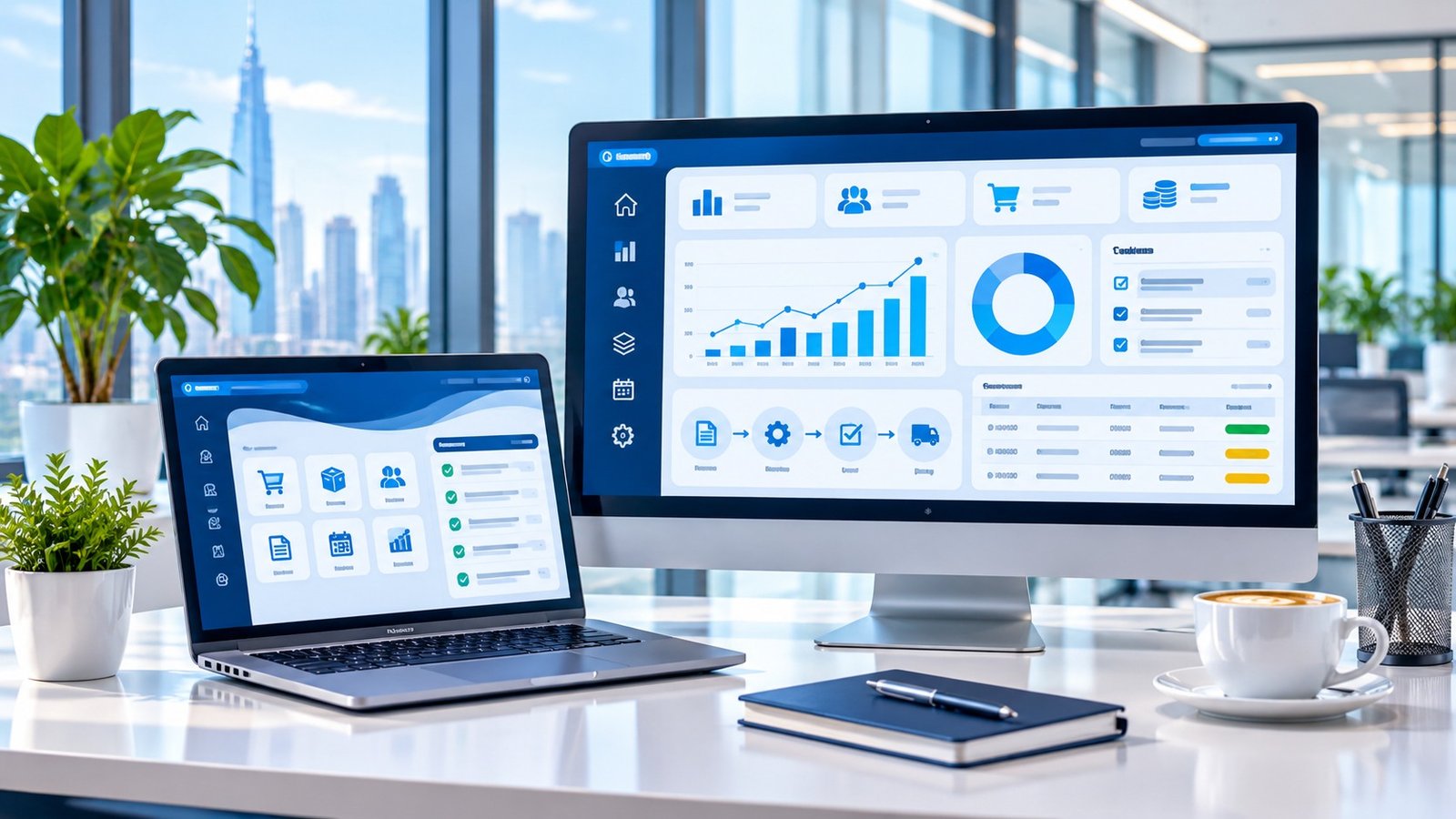
For example, instead of manually compiling information from several spreadsheets every morning, a manager could open a dashboard and review updated figures from connected systems.
Automation does not eliminate the importance of people. It allows them to spend less time on repetitive administration and more time on decisions, relationships, and valuable work.
5. Better Information Means Better Decisions
A growing business needs more than stored data. It needs information that is accurate, accessible, and useful.
When systems are disconnected, management may receive different figures from different departments.
Even basic questions about sales, outstanding payments, project progress, or operational performance can take time to answer.
A well-designed software system can provide a clearer picture of business activities through centralized records, role-based access, and meaningful dashboards.
Instead of relying entirely on manually prepared reports, decision-makers can monitor relevant indicators and identify issues earlier.
6. Think Beyond the Initial Software Cost

One of the most common questions business owners ask is whether custom software is worth the investment.
The answer depends on the problem being solved.
Not every business needs a large, complex application.
Sometimes improving an existing system, connecting two applications, or automating a single process can deliver meaningful benefits.
Before investing, consider how much time your team spends on repetitive work, how frequently errors occur, and whether your current software can support the next stage of growth.
A successful software project should have clear objectives, practical features, appropriate security, and room for future improvements.
7. Build for Where Your Business Is Going
Business growth rarely follows a perfectly predictable path.
You may introduce new services, open additional branches, increase your workforce, or enter new markets.
Your technology should be flexible enough to support those changes.
That is why scalability, maintainability, security, and integration capabilities matter when choosing business software.
A thoughtful approach to software development considers not only what your company needs today, but also how those needs may change tomorrow.
The right solution should help your business move forward without requiring you to rebuild everything whenever your operations expand.
Your Business Is Growing. Let Your Technology Grow With It.
Growth creates opportunities, but it also reveals weaknesses in the systems businesses depend on every day.
If your team is spending more time managing spreadsheets, searching for information, or working around outdated software, it may be time to explore a better approach.
At Doer Digitalz, we develop custom software, business automation solutions, web applications, and digital platforms designed around real business requirements.
We focus on understanding how businesses operate before recommending the technology that supports them.
Whether you need to simplify an existing workflow, connect disconnected systems, or develop a fully customized application, the right starting point is understanding what your business actually needs.
Your business has come a long way. Make sure your technology is ready for what comes next.
Let’s Build Software That Works for Your Business
From custom business applications to intelligent automation, Doer Digitalz helps businesses create practical digital solutions designed for their needs.
📧 Email Us 📞 Call Us 💬 WhatsApp”📘 Click here to download your 💰 Ultimate Generative AI Workbook

10% discount COUPON
[copy_inline text=”DOER”]

COUPON
[copy_inline text=”NNN12″]


Support DoerDigitalz ☕
Support our work with a coffee—small gesture, big impact.
☕ Buy Me a CoffeeEvery small contribution means a lot. Thank you ❤️